
Maybe you’ve never called it trauma. Maybe you just know that something happened — and that life hasn’t quite felt the same since.
You’ve gotten up every day. You’ve kept going. You’ve done what needed to be done. But underneath all of that, there’s something that hasn’t settled. A heaviness you can’t explain. A reaction that feels bigger than the moment. A part of you that stays on guard even when everything around you is fine.
If any of that sounds familiar, this is for you.
At Restore Mental Health, we work with people across Utah who have been carrying something heavy for a long time — often without realizing that what they’re experiencing has a name, and more importantly, that it can get better.
What Trauma Actually Is — And What It Isn’t
One of the biggest reasons people don’t seek trauma therapy in Utah is because they don’t think what they went through “counts.” They tell themselves things like:
“Other people have it worse.” “It was a long time ago. I should be over it by now.” “I don’t have PTSD!”
Here’s the truth: trauma isn’t defined by the event. It’s defined by the impact.
Trauma is what happens inside you when something overwhelming occurs and your nervous system doesn’t fully recover from it. It doesn’t matter if it was a single devastating moment or years of chronic stress, neglect, or emotional pain. What matters is how it lives in your body and your mind long after the event is over.
Trauma can come from childhood experiences, abusive relationships, accidents, loss, medical events, or growing up in an unpredictable home. It can also come from things that are harder to name — years of feeling unseen, unheard, or unsafe in ways that were subtle but constant.
If it affected you, it counts.
What Trauma Can Look Like Day to Day
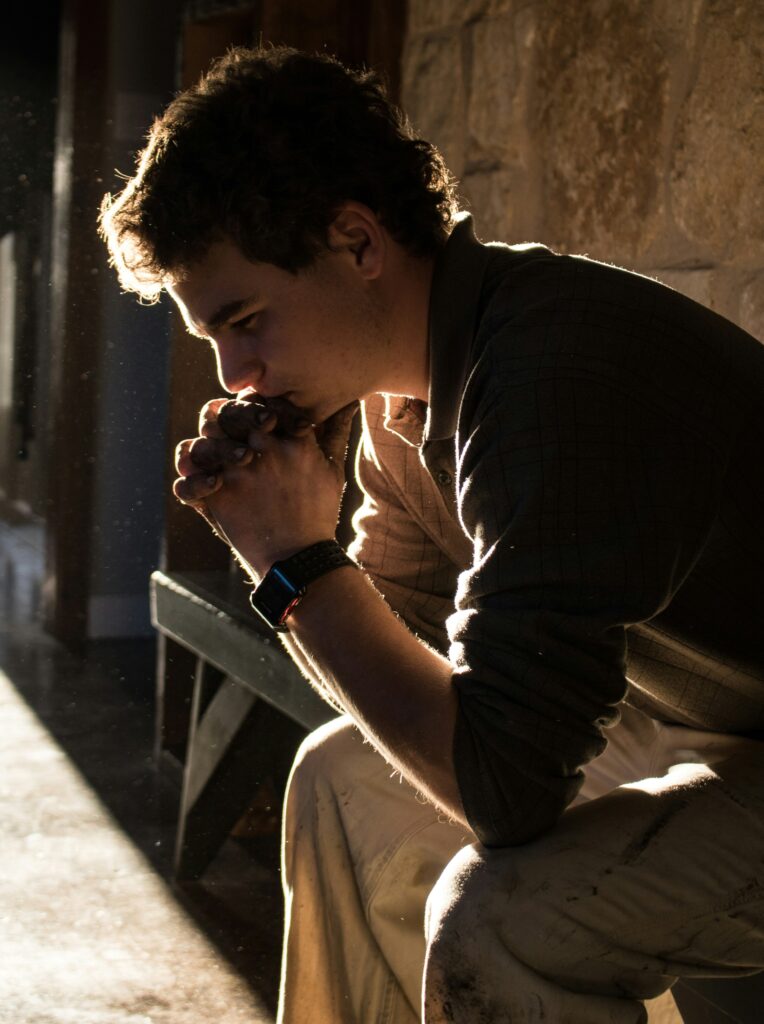
Trauma doesn’t always look like flashbacks and nightmares — though it can. More often it shows up quietly in everyday life in ways that can be easy to dismiss or misattribute to something else entirely.
You might recognize some of these:
Feeling emotionally numb or disconnected from the people around you, even the ones you love most. Struggling to trust others even when there’s no obvious reason not to. Reacting to situations with an intensity that surprises even you — and then feeling ashamed about it afterward. Difficulty sleeping, or waking up already exhausted. A persistent low-level anxiety that never fully goes away, like you’re always waiting for the next bad thing. Feeling stuck — like everyone else is moving forward in life while you’re somehow frozen in place.
These aren’t character flaws. They aren’t signs that you’re weak or broken. They are your nervous system doing exactly what it was designed to do: protect you from something that once felt genuinely threatening. The problem is that it never got the signal that the danger has passed.
That’s where trauma therapy in Utah comes in.
What Healing Actually Looks Like
We want to be honest with you about something: healing from trauma isn’t linear. It doesn’t happen in a straight line from point A to point B, and it rarely looks the way people expect it to.
It’s not about erasing what happened or pretending it didn’t matter. It’s not about reliving every painful detail until you’ve somehow talked it out of existence.
Real healing looks more like this: gradually feeling safe enough to be present in your own life again. Noticing that a situation that used to send you into a spiral now feels manageable. Waking up and realizing you slept through the night. Finding that you can be in a relationship without waiting for it to fall apart. Feeling — maybe for the first time in years — like yourself.
It can take time, and it’s not always comfortable. But it is possible. We see it happen every day with the people who walk through our doors.
How Trauma Therapy in Utah Works at Restore
There’s no single approach that works for everyone when it comes to trauma, which is why our therapists at Restore Mental Health are trained in multiple evidence-based methods.
Depending on what feels right for you, trauma therapy might include:
Trauma-Focused CBT — a structured approach that helps you understand the connection between your thoughts, feelings, and behaviors, and gently challenges the beliefs that trauma has built around your sense of safety and self-worth.
Somatic approaches — because trauma lives in the body, not just the mind. These approaches help you tune into physical sensations and release patterns of tension and protection your body has been holding onto.
Talk therapy with a trauma-informed lens — sometimes the most powerful thing is simply being in a space where you can say what happened out loud to someone who truly understands its impact, without judgment and without being rushed.
Your therapist will work with you to find the approach — or combination of approaches — that fits where you are right now. You don’t have to have it figured out before you come in. That’s what we’re here for.
You Don’t Have to Keep Just Surviving

There’s a version of your life where what happened to you is part of your story — but it’s not running the whole show anymore. Where you can be present with the people you love. Where you’re not constantly bracing for impact. Where you feel safe in your own skin.
That’s not a fantasy. It’s what healing looks like. And it’s what trauma therapy in Utah is designed to help you find.
You’ve already done the hardest part — you survived. Now it’s time to heal.
At Restore Mental Health, our licensed therapists specialize in trauma therapy across Utah. We offer individual therapy for children, adults, teens, and families in a warm, judgment-free environment where your experience will always be taken seriously.
Ready to take the first step? We have locations in Salt Lake City, Orem, and Clearfield and telehealth appointments available for those who prefer to connect from home.
 Call us at (385) 284-7274
  Visit restorementalhealthutah.com to schedule a consultation
You don’t have to keep carrying this alone. And you don’t have to keep just getting by. Healing is possible — and it starts with one phone call.